
With us it looks quiet? Can be! But…
that's not that! Aside from summer holes and holiday abnormalities, we are constantly working on projects. Here's our August-Momentum. An overview of what has happened before under the hood.
Administrative whirlpool with vanilla sauce
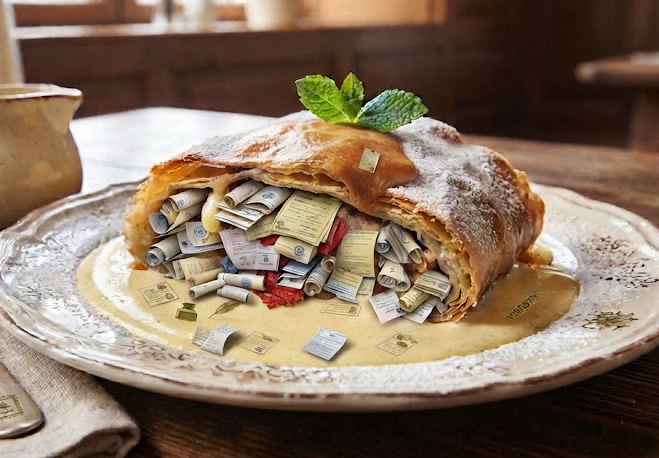
In June and July, we had a flurry of meetings for our annual cultural funding application, board meetings, the general membership meeting, and several working sessions to hold our annual general meeting, finalize the corporate tax return (which is filed every three years), re-elect the board after three years, and sort out all the related matters—both preparatory and follow-up tasks.
As of July 4, 2026, our new board consists of the three regular board members: Mario, Tino, and Benjamin. Toni has joined us as an associate board member. We would like to take this opportunity to bid farewell to Steffen and Holger as they step down from their positions and express our sincere gratitude for their many years of organizational support and for sharing their insights, attention, and knowledge. An overview of our team can also be found here.
A lot of time spent on board work goes toward things that nobody really likes or might not even notice: writing invitations and minutes, preparing agendas, pestering people, holding meetings, public relations, thinking ahead, reading, understanding, and researching.
Hello Europe: Octobermake and VULCA Seminar
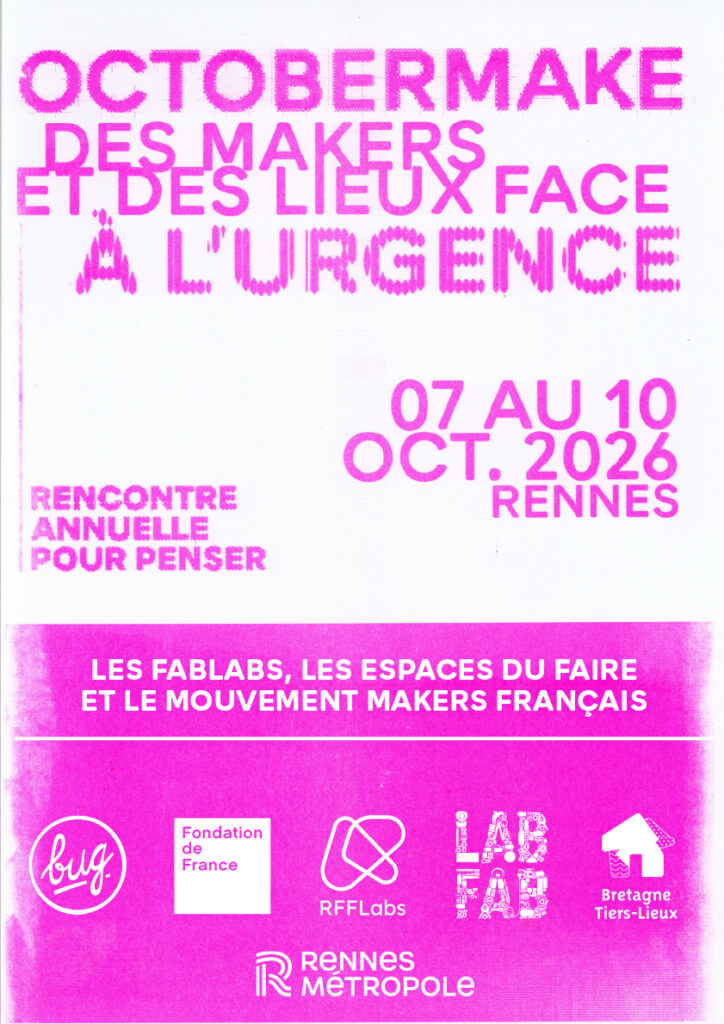
We are delighted that the German umbrella organisation VOW e.V. and our active member Maik will be taking part together at this year’s OctoberMake in Rennes from 7–10 October, with support from the Franco-German Citizens’ Fund (DFBF). OctoberMake is the annual main gathering and national conference of French open workshops. We worked together as an association to prepare the successful application. Broadly speaking, the aim is to further consolidate the Franco-German partnership and have an even greater impact.
It’s also a great opportunity to catch up with friends such as Hugues Aubin from the Climate Change Lab and Amelie Tehel from RFFLabs, and to get up to speed on the latest developments.
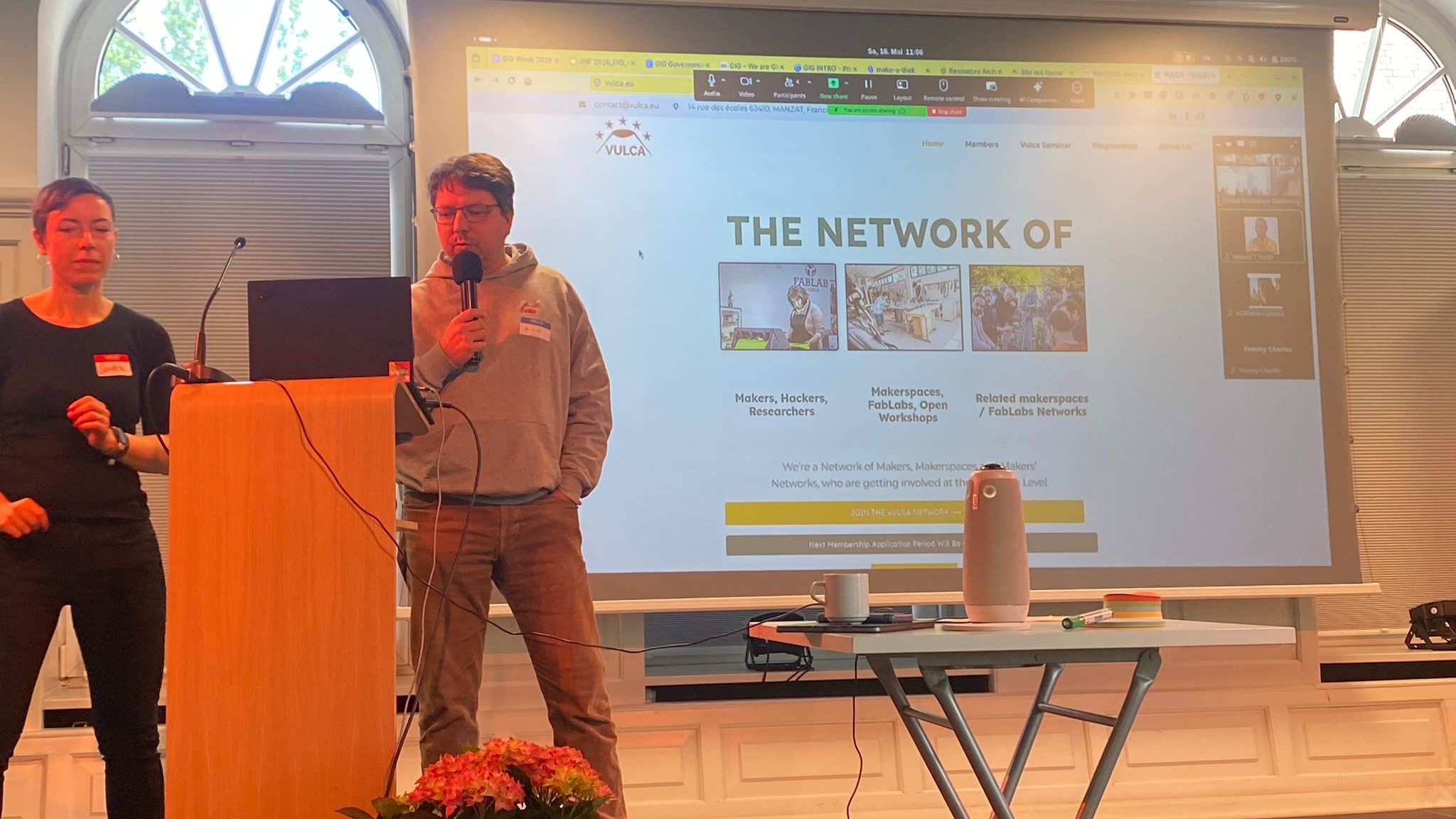
Our two representatives, Babette and Maik, are also doing their utmost to support the VULCA team. The next seminar will take place in November. We are looking forward to the international workshop entitled ‘Professional Makers for a Resilient Europe’, which will be held from 11–13 November in Cuenca, Spain. The VULCA network is a European association for fablabs and makerspaces, ranging from individuals to large associations and networks. Most recently, in May, Jason and Jeffrey visited us in Chemnitz as representatives for Europe Day.
Outside
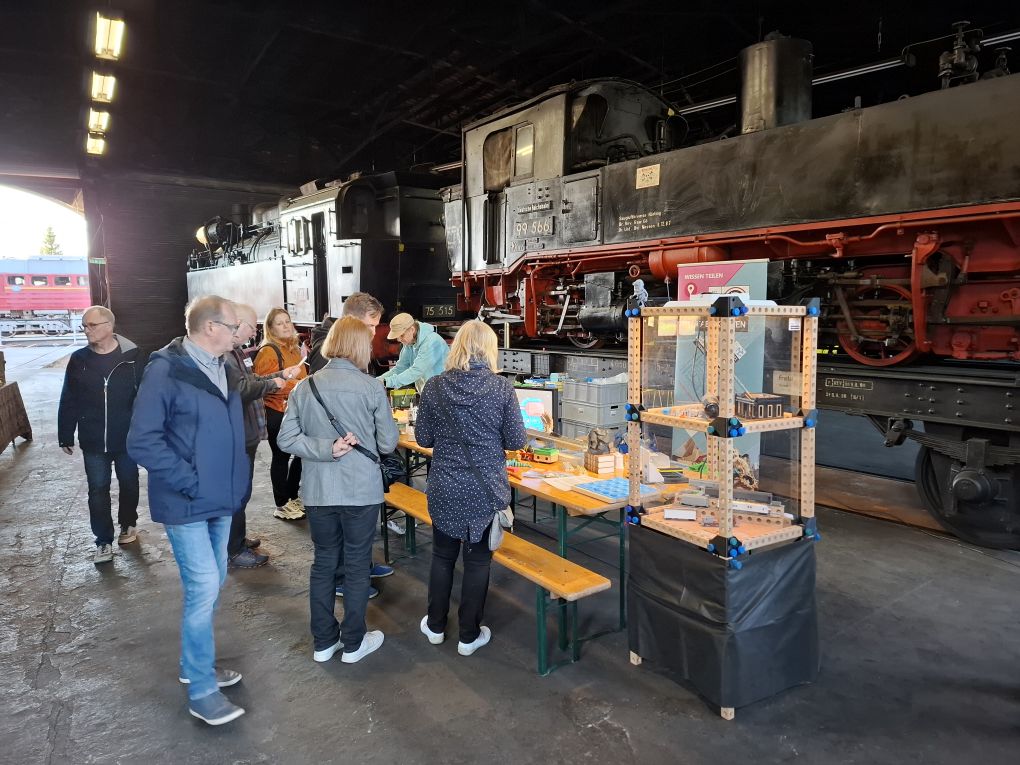
Now that we’ve got our administrative workload sorted, we’re currently mainly busy with summer activities. However, there was plenty going on in the previous months too. For instance, we ran a craft workshop at the traditional Chemnitz Museum Night. Maik, in his key role as a networker, attended the Global Innovation Gathering (GIG) Meeting in Berlin on 16 June and a political exchange with the Franco-German Citizens’ Fund on 22 June – an event also attended by Julia Klöckner, President of the German Bundestag.
In mid-August, we’ll be attending our regular event and one of the club’s most important events: the MakerFaire Hannover from 15–16 August. This time, we’ll be travelling there with 16 club members – a sizeable group. For us, this is always a great opportunity to engage in more in-depth discussions. After all, even within the club, many people see each other far too rarely, yet getting together is absolutely essential for maintaining our shared activities and interests.
At the end of August – from 27 to 30 August, to be precise – the summer camp organised by the Verbund Offener Werkstätten will take place in Frankfurt; this year’s theme is "critical making". We are very much looking forward to seeing what the participants produce and contribute, but also to the venue itself and a few pleasant moments to simply pause and reflect.
At the same time, we’ll be at KOSMOS on 29 August, adding our range of activities to the organisations’ fair.
In the Stadtwirtschaft
There's always something going on in the Stadtwirtschaft neighborhood. New neighbors are moving in.
Who, how, what?
Our good friend Richard is really making headway with his chocolate factory, FAUCH SCHOKI, and we’re supporting him with advice and practical help, as well as by collecting parcels from DHL, Hermes and the like – just as others did for us last year, haha. We wish him continued success in getting everything up and running.
Our spirited neighbours at Braubox also put a lot of attention to detail and perseverance into their beer-brewing solution, so every now and then we exchange ideas on little things that somehow help us along.
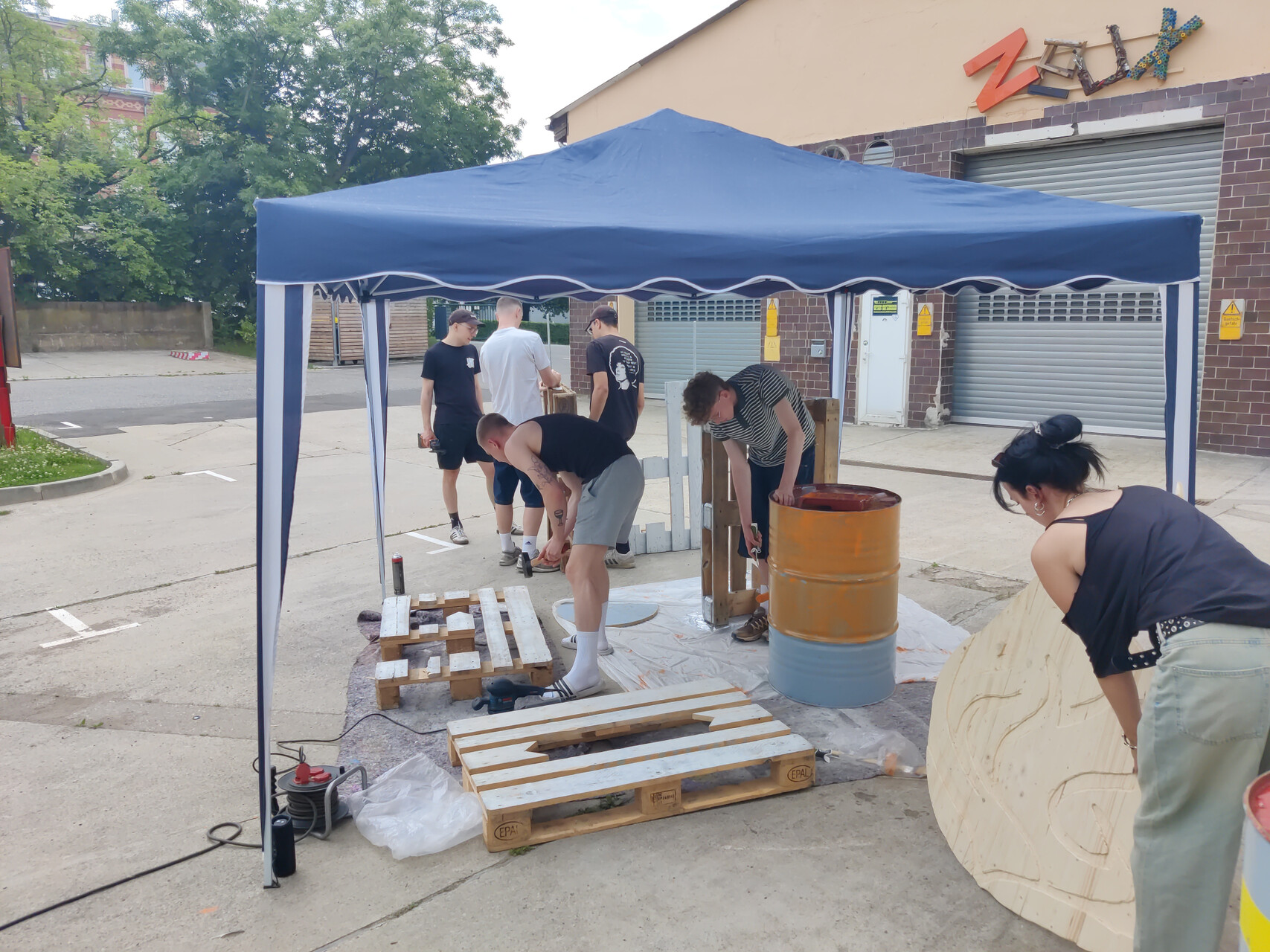
It’s just a short hop over to Haus K, home to the Zeux Materials Initiative, which has only recently completed another impressive infrastructure expansion entirely on its own; a chat there is always worth at least the time it takes to drink a cup of coffee.
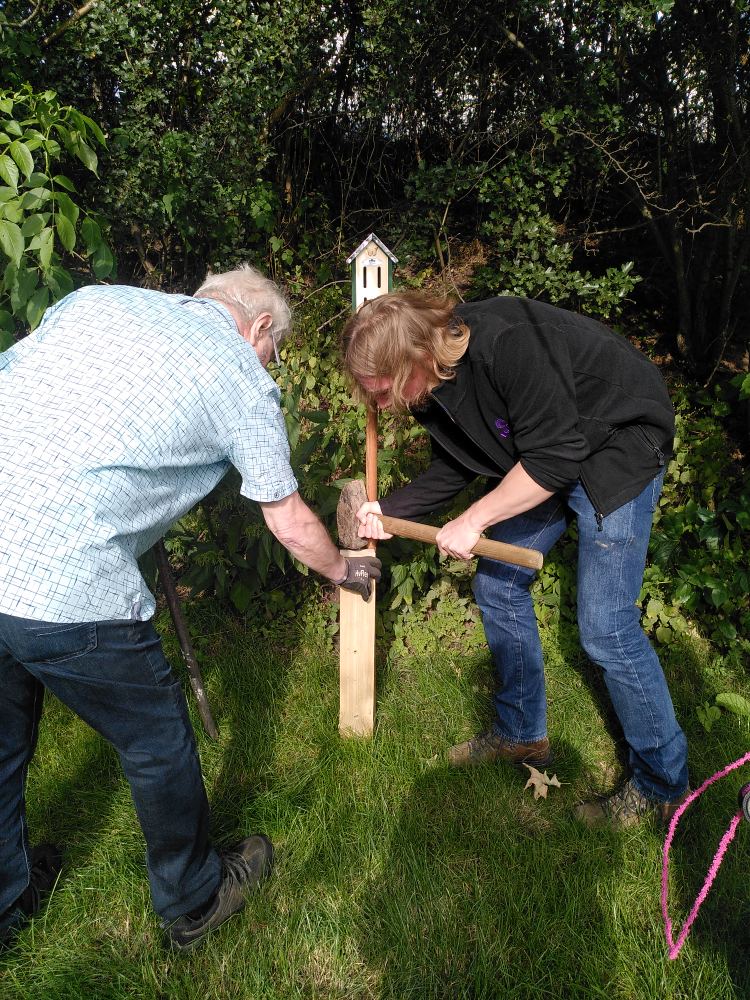
The public book place built with Zeux in the spring goes to show that neighbourhood projects can be a good thing for everyone: they bring people together, combine and complement knowledge. This little gem is regularly visited by users and is kept in good condition. The mini-pond next to it provides a good source of water for insects and small animals, as well as practical water for watering the flowers in the upcycled washbasin raised beds and the hexagonal raised bed donated by Holzkombinat, where new guerrilla tomatoes are already running riot.
All in all, the neighbourhood is a significant foundation for us, one we always looked forward to back when we were on Philippstraße (the old FabLab site): a large, open courtyard with lots of other creative and friendly people, friends, guests and family members, all doing different things yet somehow connected to one another in spirit: through the sharing of energy and creativity, perseverance, humour, ideas, appreciation, value creation and a special kind of sense of community – everything that is priceless.
A small area of organic area
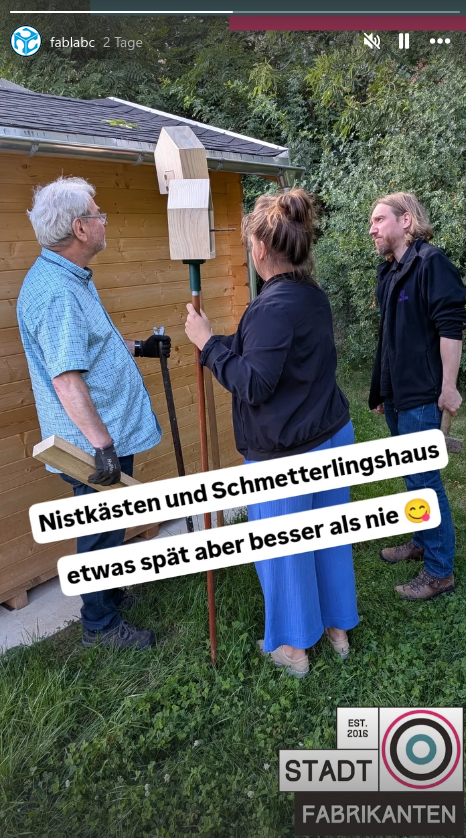
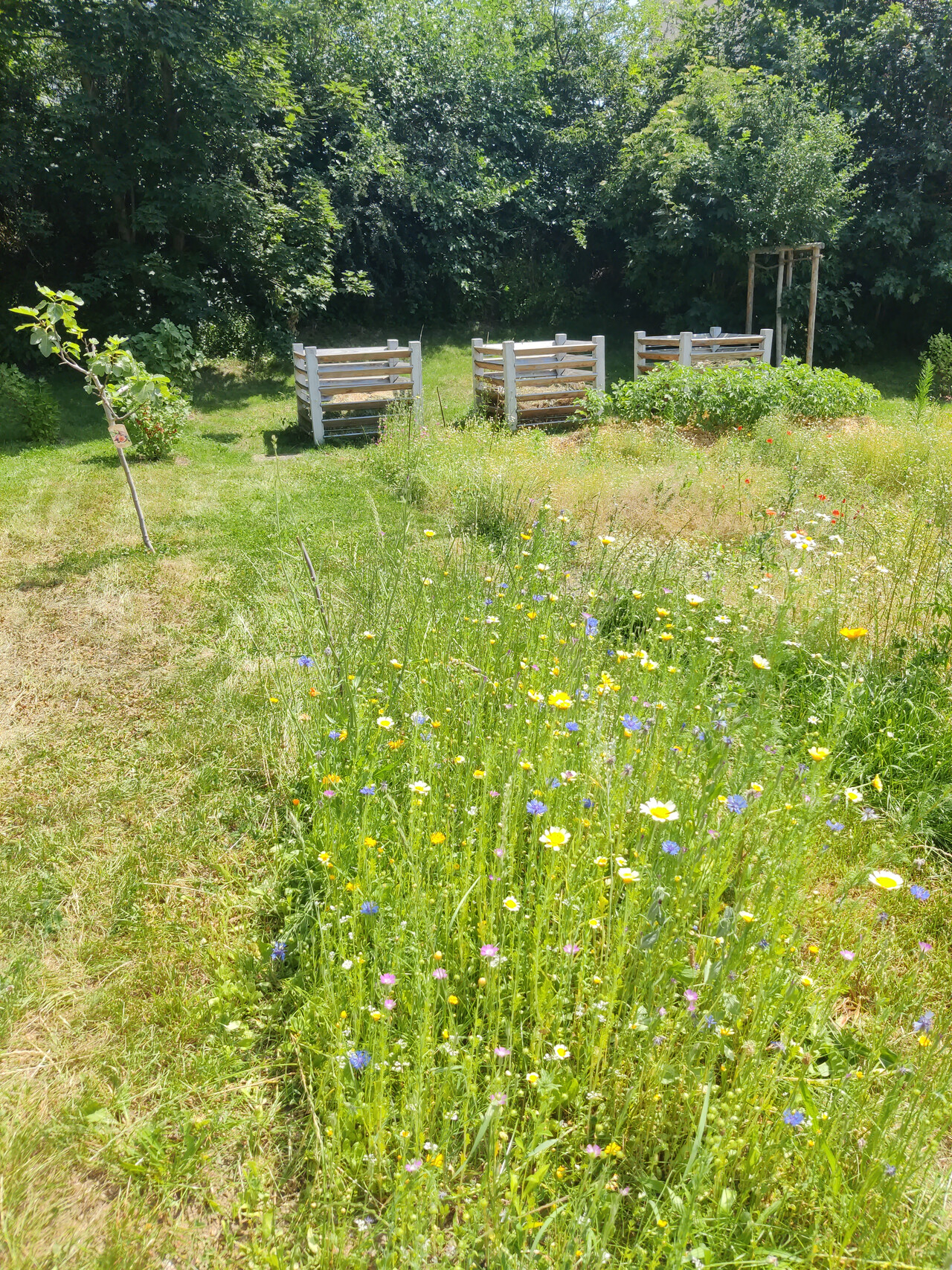
We’re also delighted with a few little things we haven’t mentioned yet: there’s plenty of fruit growing on the grounds, which is brilliant for a quick snack between meals – there are freshly planted trees and a lovely old grove. At Stawi, there are, amongst other things, redcurrants, gooseberries, apples, pears, mulberries and plenty more to nibble on. We also take care of the odd bit of greenery when it comes to watering and planting, and look after the little birds, for whom, for example, our neighbour Ingo, a restorer, has set up a water bowl. Bird food, feeders and nesting boxes are something we tackle as hobbyists – not on a professional level, but we do get involved. After all, lending a helping hand to nature, which is so often mistreated, is important and can be done right on our own doorsteps. That’s why we’re still delighted when the little Stawi bunny hops across the grounds in the evening, having endured over two years of ongoing building work.
Neighbourhood warehouse
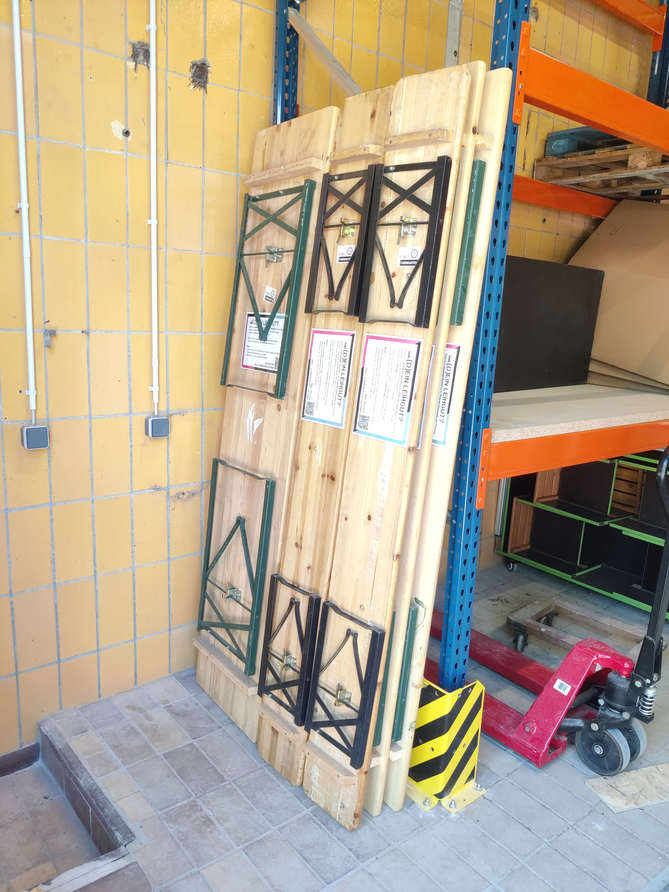
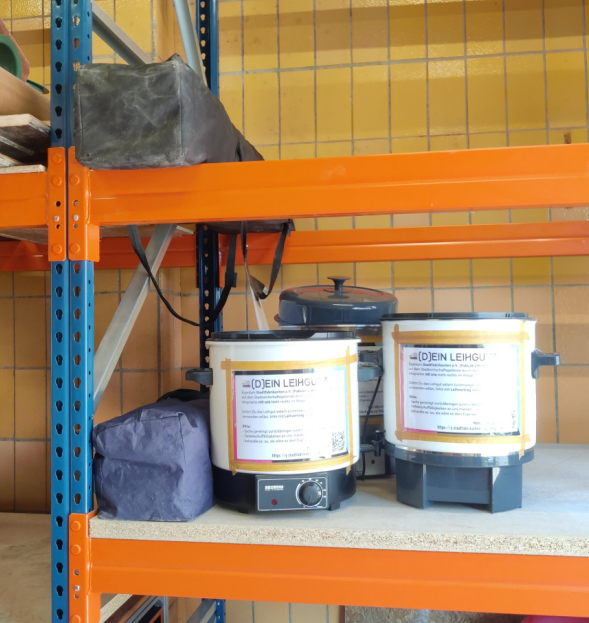
From July onwards, we’ll be storing equipment for ourselves and our neighbours who rent from us, and that has benefits for everyone: we’ll have more space, and others will have more options. The neighbourhood storage facility is a really handy thing.
Further information is available at https://y.stadtfabrikanten.org/leihgut.
A bustle and a buzz on 6 September
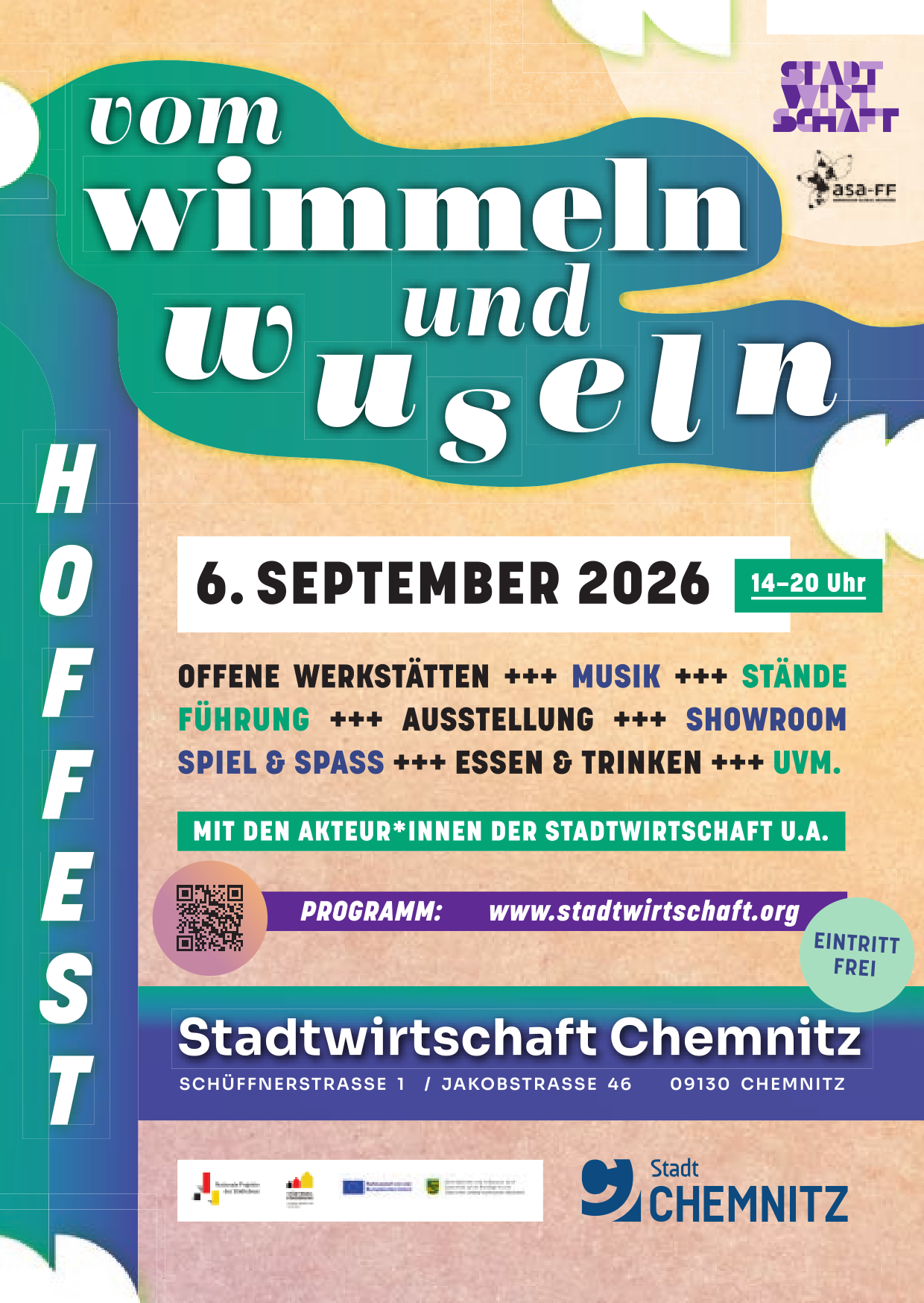
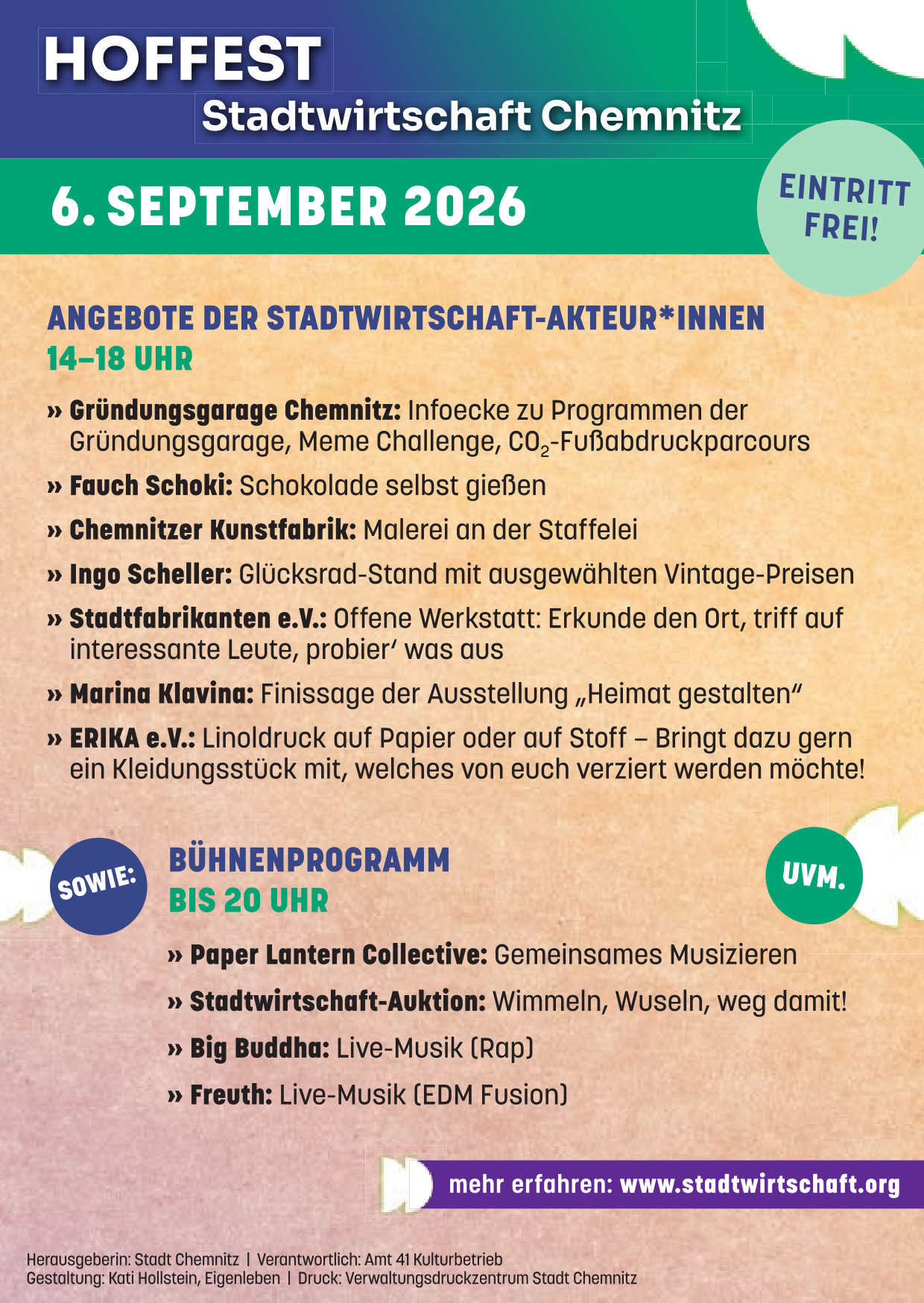
By the way: on 6 September, the Stawi courtyard festival ‘Vom Wimmeln und Wuseln’ will be taking place for the second time – it’s an open afternoon and evening featuring a programme of music and culture, offering a chance to get to know the site and its creators a bit better over a nice drink. The whole event is once again supported by the asa-ff Gründungsgarage and will feature performances by various tenants of the courtyard. Further information can also be found at stadtwirtschaft.org. Here you’ll find the flyer designed by Kati Hollstein (Eigenleben) – another brilliant neighbour from Stawi.
Open workshop: metal workshop: collaborative workshop
… workshops here, there and everywhere.
Open workshop?
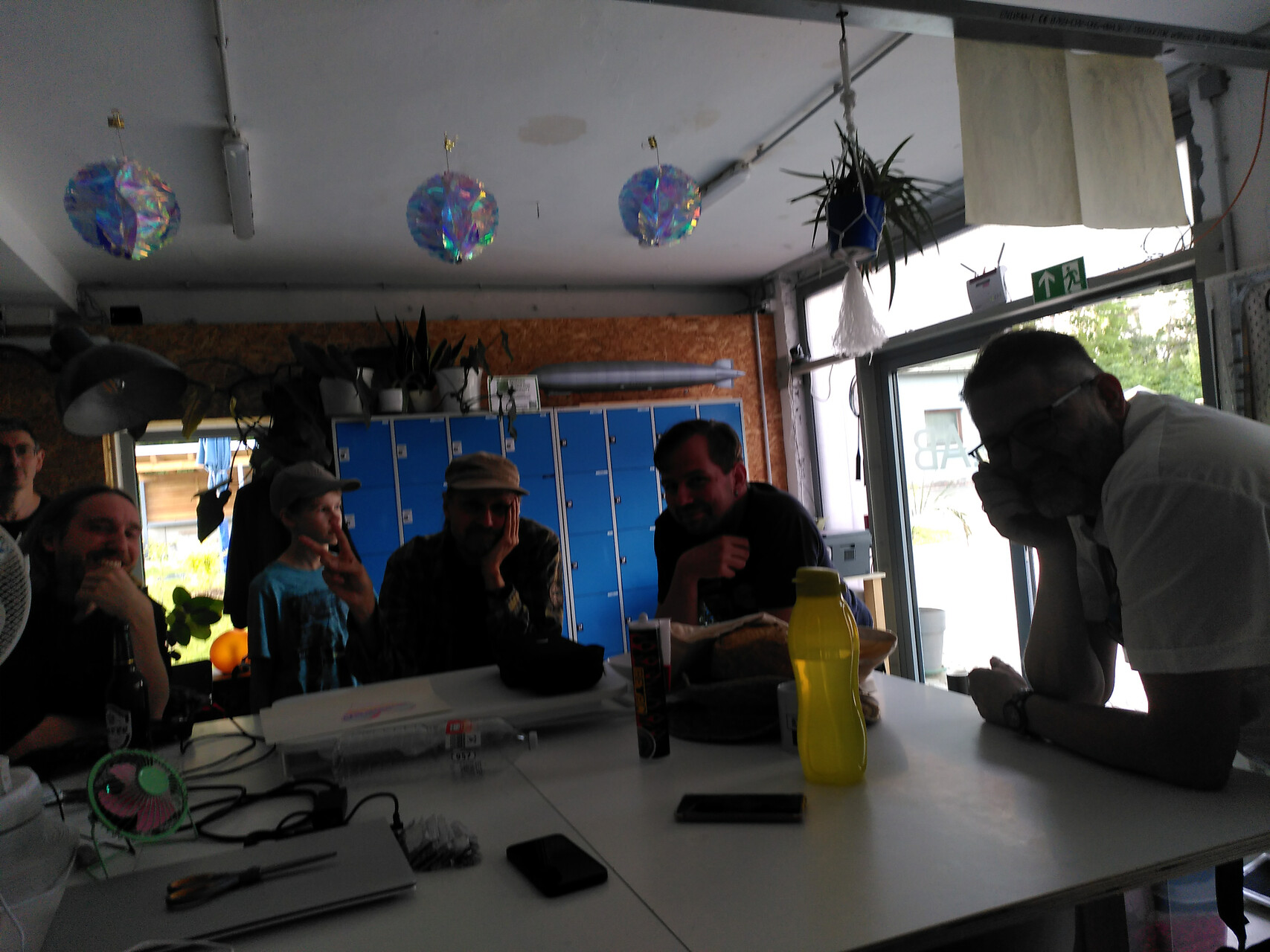
The FabLab’s Open Wednesday is a colourful and exciting mix of activities every week. Above all, it creates all sorts of opportunities for people to meet. Visitors and neighbours from the local area, with questions, ideas and specific requests, meet a constantly changing mix of club members, volunteers and other visitors. We can’t always provide a suitable answer to every enquiry – for example, due to time constraints or a lack of expertise – but we do our very best to refer people to the right people or resources.
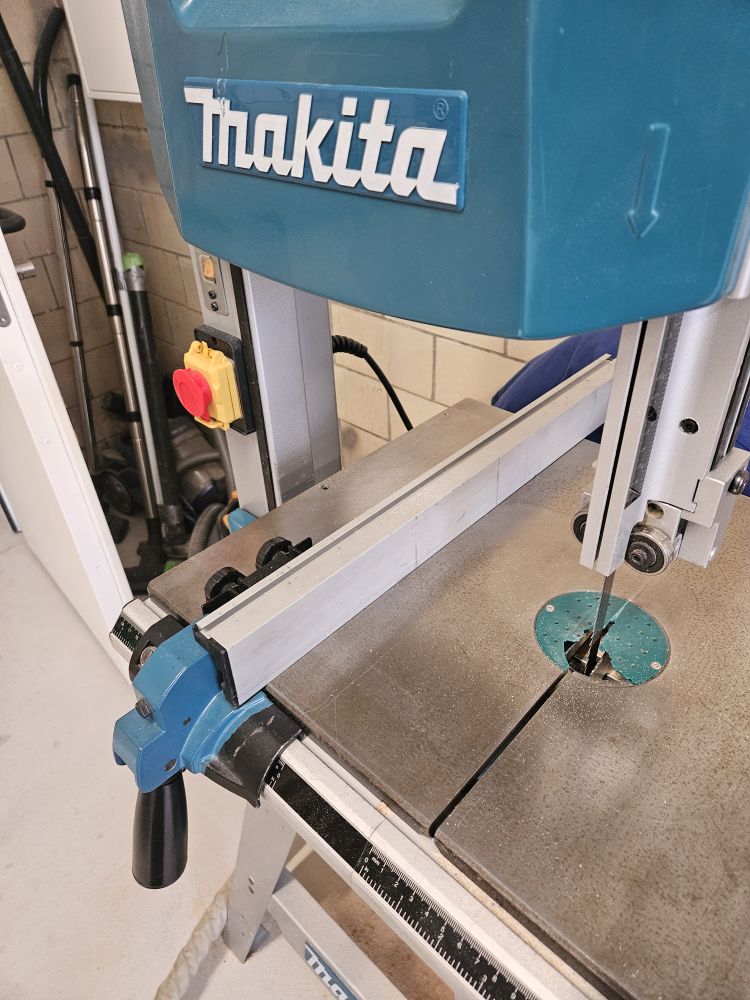
More often than not, repair requests come in from the textile or woodworking sectors, amongst others. Every now and then, a bicycle or lawnmower is made (more or less) roadworthy again, a T-shirt is mended, a zip on a pair of trousers is repaired, a stain is covered with a small vinyl transfer, or an old, rustic one-off piece is spruced up: sanding, sawing, drilling. Or checking a 3D-printed part downloaded from the internet, printing it and fitting it – does it fit or not? The variety of tasks is always fascinating.
Repairs are not our main focus, but they are nonetheless an important aspect that we share, in various forms, with other initiatives in Chemnitz: for example, the ADFC e.V., Dr. Radinger, Computertruhe e.V. or the Repair Café run by Stadthalten e.V.. As a rule, we always refer people to suitable local initiatives if we are unable to help or if someone might be better served elsewhere, because we all thrive on working together, but also on looking out for one another.
To this end, our volunteers in the various workshops here keep the premises and equipment in working order and have, for years, devoted a large part of their personal free time to the community – which involves a great deal of work and does not always seem to be appreciated or valued as it should be: after all, even the equipment needed for repairs has to be repaired and maintained itself. It’s no easy task. This generates various running costs, which are often not covered by individual donations or usage fees: electricity, water, heating, grinding, cutting, lubricating and cleaning materials, spare parts, etc. As a result, some repair jobs can feel very drawn-out until the item is restored to a ‘working again’ condition.
The description at stadtfabrikanten.org/en/fablab-chemnitz sets out the principles we have stood for for years and which we are keen to emphasise once again: “Open workshops are places of craftsmanship, computer-controlled production processes and digital technologies that you can help shape and use. They are all united by the idea of sharing knowledge, tools and machines, technology and materials.” and “Workshop, tools, machines, ideas, creative exchange platform and hemisphere for "Do it together" or "Do it with others". The FabLab is as versatile as you are, because you can actively help shape it and contribute to making the FabLab a little more colorful.”
Unfortunately, we are currently seeing an increase in the number of enquiries of a more service-oriented nature, for which we, as a group, do not feel it is appropriate to take responsibility; we would prefer to refer such enquiries to tradespeople who can handle them within a reasonable timeframe and to a high professional standard, and who also charge the appropriate fee. For some enquirers, interest in the association and the community is simply far too low – instead, there is an unpleasant, demanding ‘let-us-do-it-for-you’ mentality, which, in the form of rather one-sided discussions, in turn takes up valuable time that is then lacking for other people who would be better served by that attention.
That is why we are currently in a phase of reflection and exploration, seeking to better define what sets us apart, what our purpose is, what we should be doing, and what does not form part of our core remit. The aim is to communicate the association’s fundamental objectives to existing and potential users in a direct and understandable manner. The focus should be more on how to convey this description in practice and through personal dialogue, and less on how it is simply added on top of the statues, terms of use, regulations, guidelines, legal requirements, code of conduct, XYZ and so on – only to be ignored by everyone.
Metal workshop?
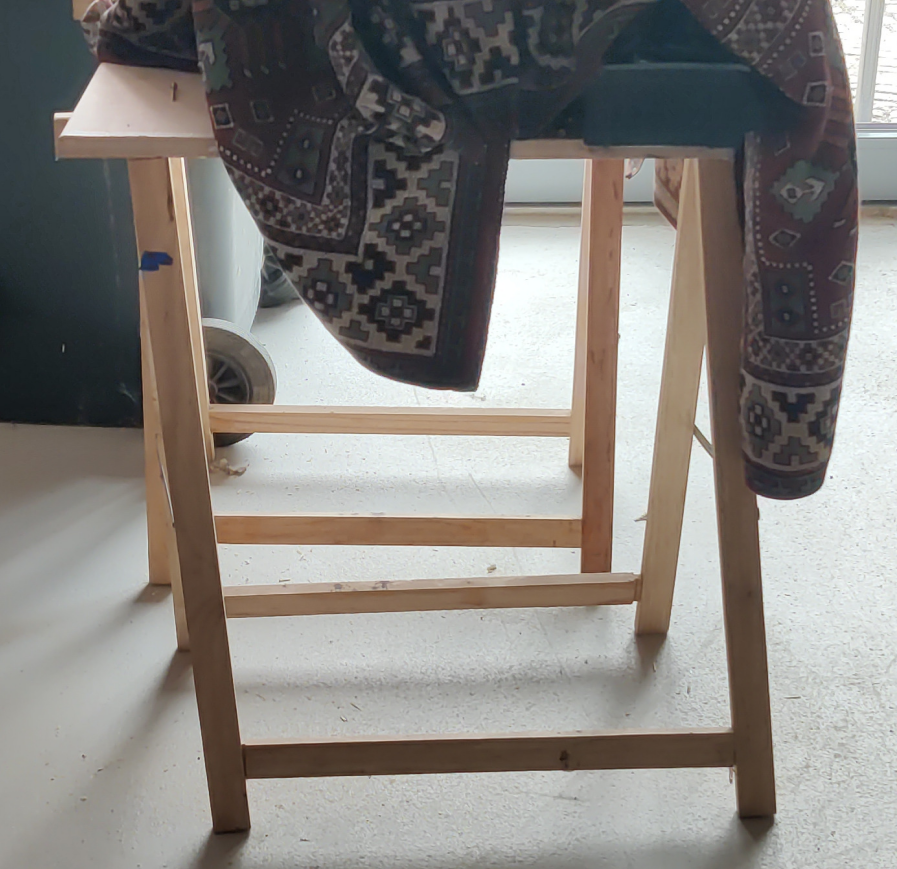
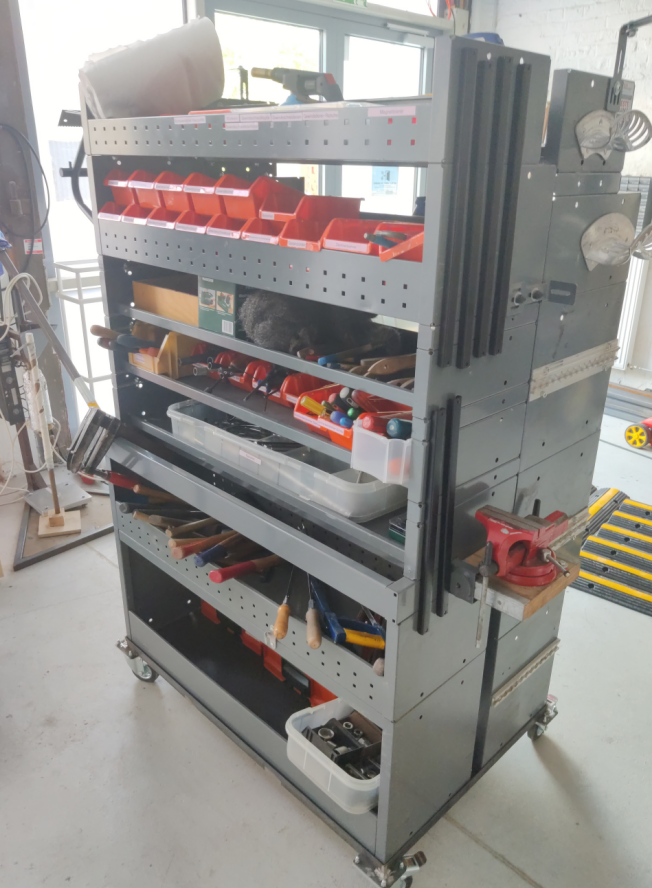
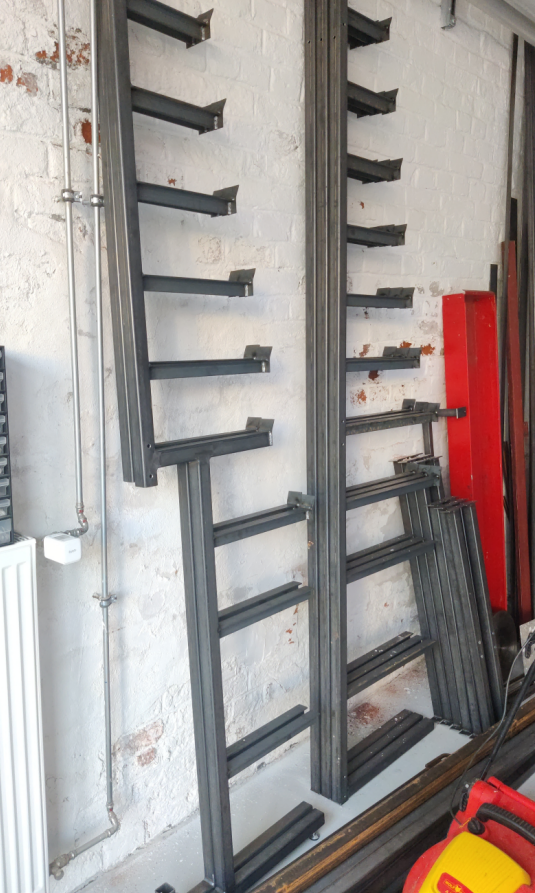
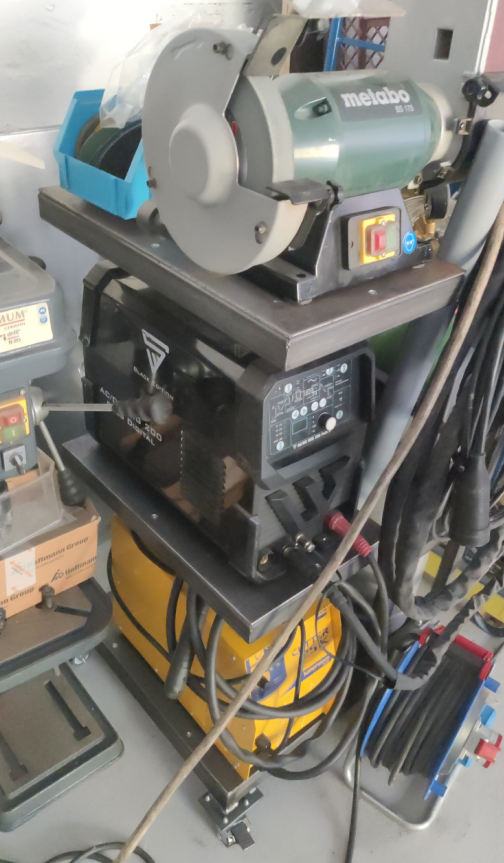
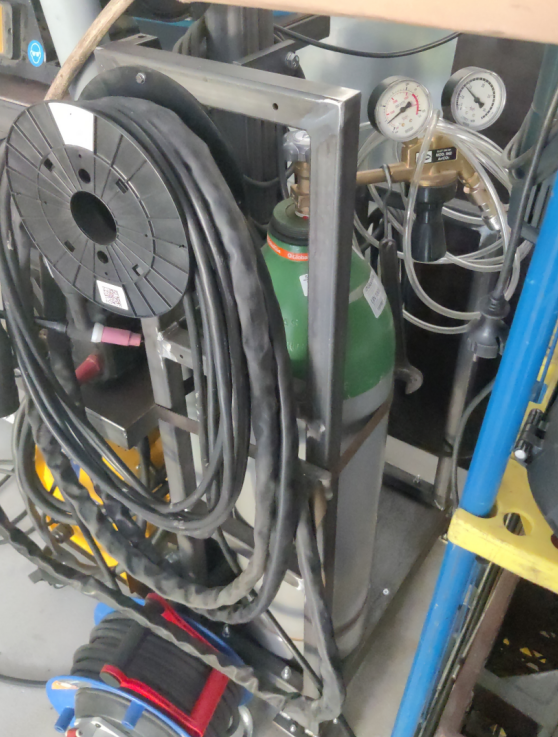
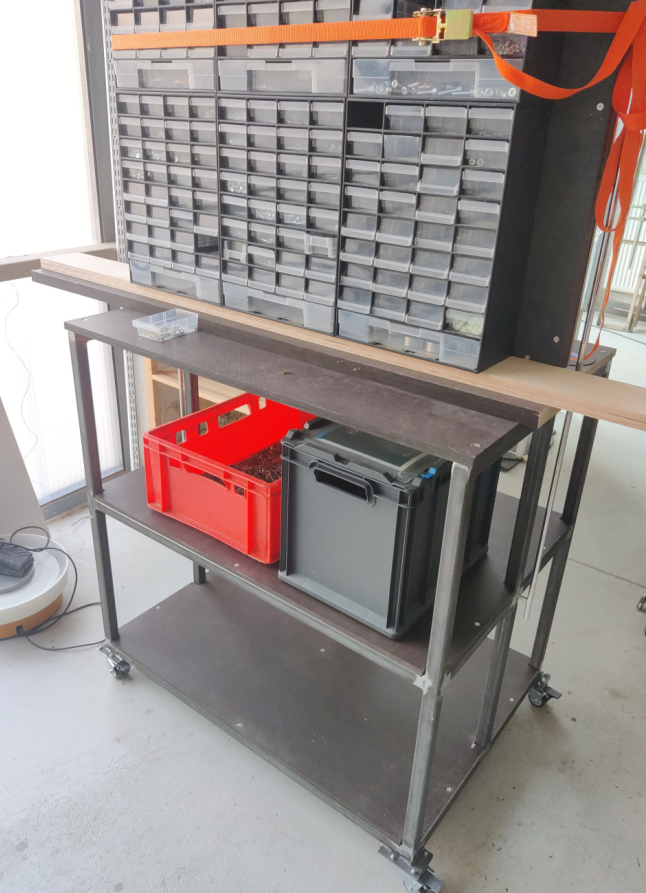
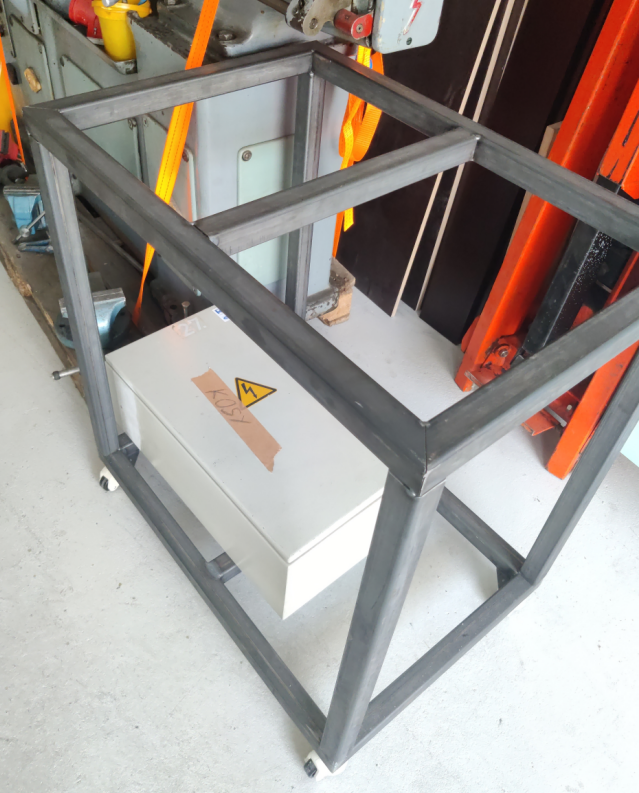
In the metal workshop, physical progress is being made slowly but surely. Mathieu, in particular, is still putting a lot of time into the metal workshop to complete the work he has started on the bar stock rack, the mobile consumables trolley, the table frame for the mini CNC milling machine and the welding equipment rack. A great deal of dedication to detail and execution goes into this: material requirements planning and procurement, CAD design, welding plans, ongoing adjustments and, of course, the hands-on work with metal, dust and dirt. Not everything can be done quickly.
Our newer, very active member RJ also spends a lot of time exploring the workshop and is actively involved in producing her own reports. She places particular emphasis on metalwork, especially welding; she contributes her own knowledge, tries out new things and shares her expertise with others. We can’t wait to see what else is in store!
The ceramics corner hasn’t been ruled out entirely either, even if it still hasn’t been put into practice.
Collaborative workshop?
Through collaborative partnerships, we have been sharing our workshop this year – in addition to the weekly open workshop every Wednesday – for initiatives such as the enter THE RING project or the preparations for the 20th anniversary of Fuego a la Isla.
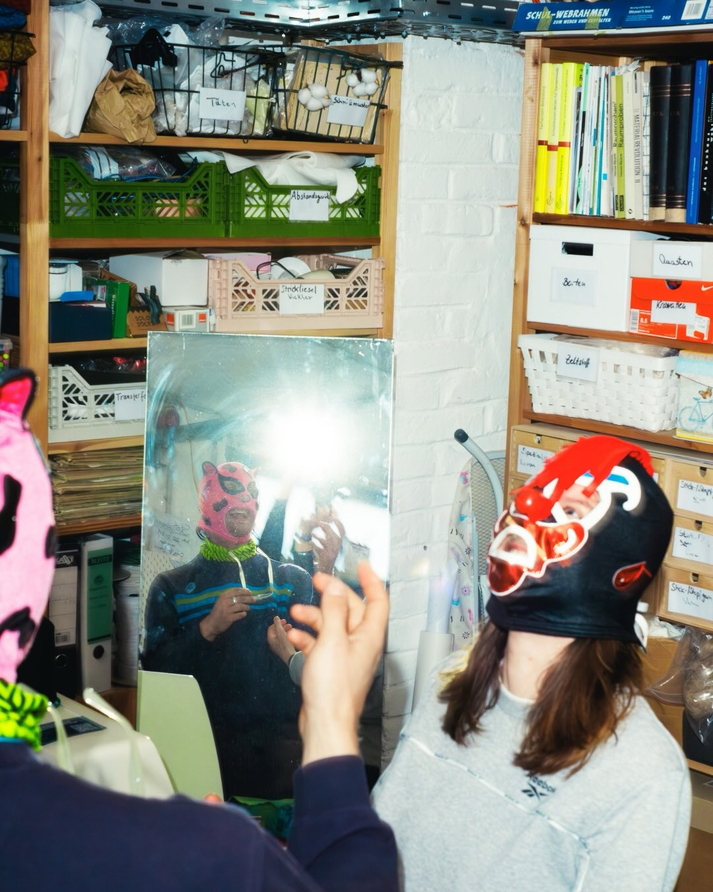
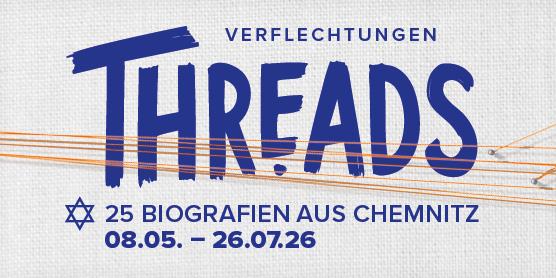
For the special exhibition ‘Threads – Interconnections’ (opening 8 May and extended until 2 August 2026) at the SMAC, we made cross-departmental use of the FabLab to prepare for the exhibition. Our project involved setting up the hands-on embroidery station. As part of this, we produced a comprehensive guide covering the ‘how-to’ and background information, which we have posted on our wiki.
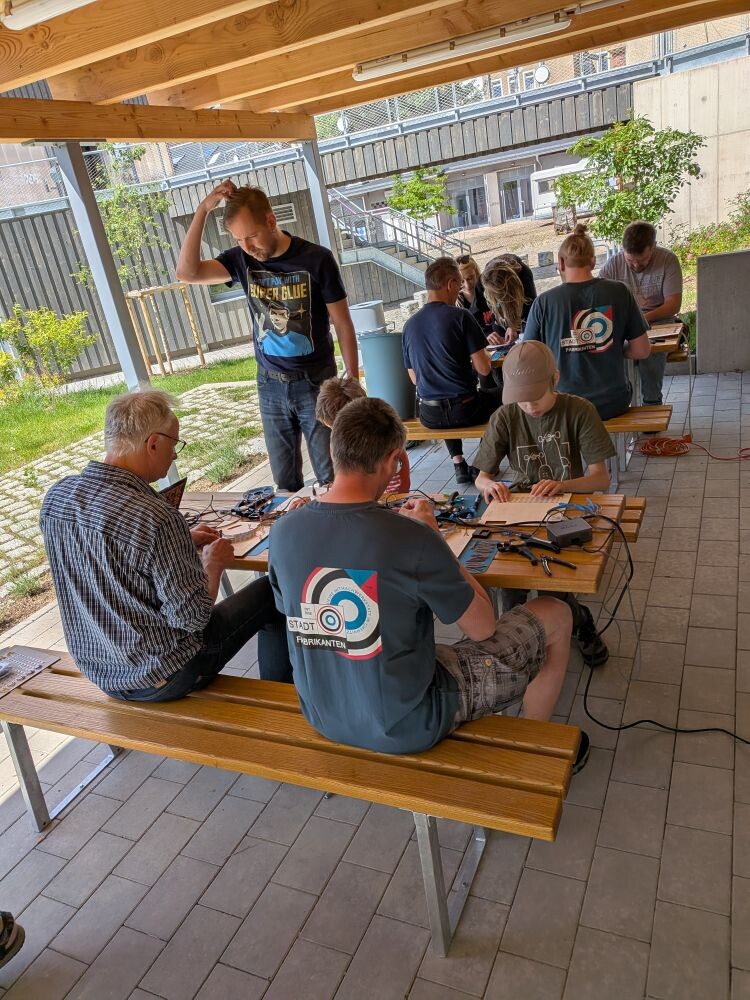
In June, we hosted our second Wordclock workshop. As the weather was lovely, we decided on the spur of the moment to hold it outside, right on our doorstep. Another Wordclock workshop with Nick Grimm from Sternenlabor is scheduled for 3 October. A proper announcement will follow. Anyone interested can sign up here already.
On 24 and 25 October 2026, we are also inviting you to the seminar "Gekommen um zu bleien", organised by VOW e.V. and TinkerTank. The seminar will cover the following topics:
We want you to come (back)! That is the wish of the Open Workshops. And at a structural level, there are many ways to make the barrier to entry as low as possible. This training module explores social and communicative approaches. How can workshop organisers and participants welcome others in such a way that they feel keen to come back? What does team leadership look like when we all feel seen and valued? We’ll explore and reflect on the culture of communication, feedback and interaction in Open Workshops, as well as the fundamental building blocks of successful organisational development based on mutual respect.
Digital
As an association and an open workshop, we continue to place great importance on digital literacy and on fostering a holistic approach – viewing digital tools, just like physical tools, as part of a well-organised kit in which everything is carefully coordinated.
Understanding things for yourself, doing things yourself and improving them, using open source, contributing to open source, and promoting and spreading open source. Those who do not do things themselves become dependent, do not develop their skills particularly extensively, and fall behind. This also applies fully to virtual topics and poses a threat to democratic or community-building action. Of course, even open-source projects are not entirely free (e.g. hosting issues) or independent, but they still offer the potential to act as a counterbalance to Alphabet, Amazon, Meta and the other internet giants who snatch tools and opportunities from our hands and squeeze every last penny out of our pockets.
In these times of ever-increasing demands on both sides of the coin – in terms of website security and service, as well as server operations – we too are taking proactive steps and constantly adapting. More checks, more updates, even more documentation, more monitoring, greater security, and so on. Unfortunately, this is felt extremely keenly in the efforts required to address these challenges…
Many active, open-source software projects are releasing security updates more frequently in their release cycles simply to be able to continue functioning – or to be permitted to do so – given the current challenges; this is particularly evident when it comes to operating systems. News items like this on Golem are piling up in staggering numbers. This is causing a significant increase in workload for developers, administrators and users alike, as well as a mental strain: reading and understanding changelogs and update instructions, implementing necessary configuration changes, testing, coming to terms with any new restrictions, exercising scepticism, or simply leaving things out?
Among other things, we have incorporated – and continue to incorporate – the increased use of honeypots, fail2ban mechanisms and early-warning systems as part of our response to the global internet developments we are observing.
Unfortunately, our widely used Hedgedoc instance has been semi-public since July – i.e. accessible by invitation only – as the volume of abuse in the form of advertising bots has become too high.
With the rise in AI usage across the globe, various providers are increasingly sending unfiltered, annoying, attention-grabbing junk data to their recipients – even industry giants such as T-Online and Netcup. I shan’t even begin to mention the unscrupulous waste of electricity and hardware by those who distribute it. The result: sifting valid content from the mountain of digital rubbish comes at the expense of trust, anticipation and our own ‘life time balance’ – we all feel this in one way or another. Ultimately, the ultimate question might well be one of meaning: what’s the point of it all anyway?
Stadtfabrikanten have also been inundated with such an unbelievable amount of spam, scams and phishing attacks over the past few months that it was high time to invest far too much manpower in this area once again. Consequently, a great deal of focus was therefore placed on adapting our mail server architecture: antivirus hardening, implementing more modern spam filters (SpamAssassin), actively reporting spam emails ourselves to the global anti-spam network (including Pyzor and Razor), and using Postscreen. The measures we’ve put in place have now led to a significant improvement in the situation. The question is, however, how long will this last?
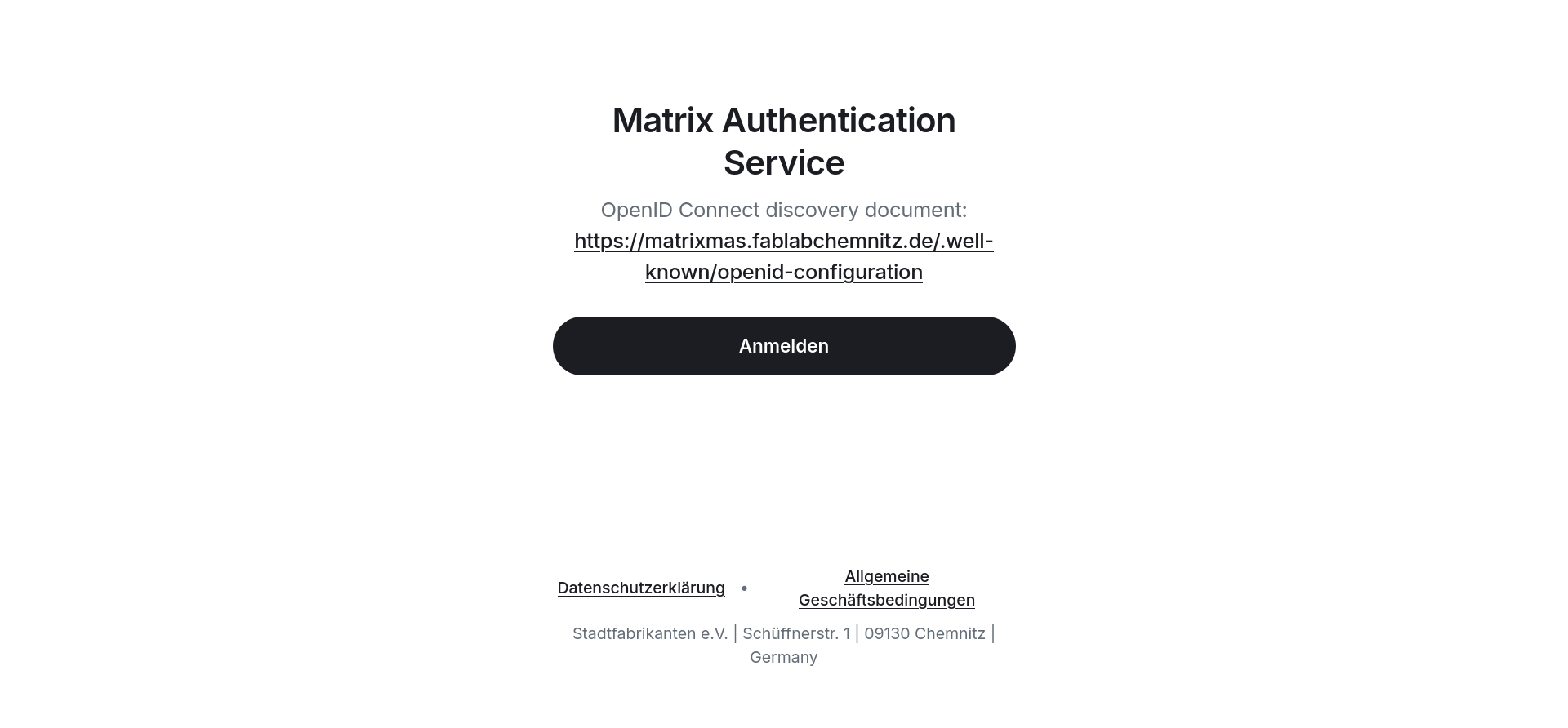
Our Matrix Synapse Server now supports OIDC via the "Matrix Authentication Service" and fully supports the latest "Element X" client version on Apple and Android devices. This allows users to share their live location, amongst other things. Video and IP telephony are working again – now with the modern Element Call. This brings us back up to date in terms of real-time communication, whilst still offering a genuine alternative to privacy-invading apps such as WhatsApp or Telegram, as Element features strong native encryption (Double Ratchet). The question here, too, is for how long. Matrix is a great service, but it also requires a lot of effort to master.
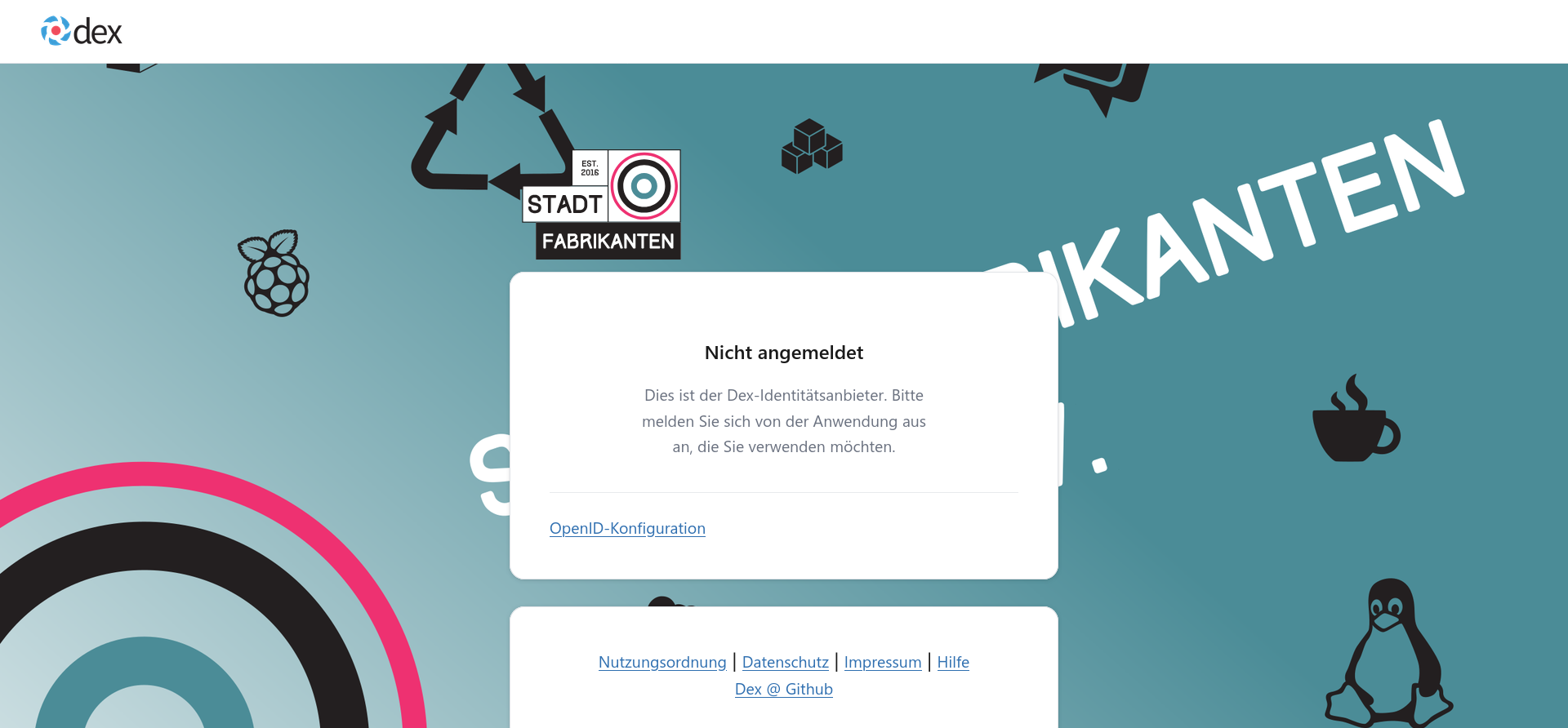
Overall, the majority of our association’s online services have been integrated in the background with an OpenID Connect provider called Dex IdP. This is because, with the sheer number of logins and passwords piling up, ordinary people – who find all this complex stuff a right headache – lose track of their accounts. However, there is no such thing as a ‘jack-of-all-trades’ software that can do everything, which means that, for various content-related purposes within the association, many standalone solutions are a relative necessity and also a source of practical diversity – specific programmes are simply better suited to their intended purposes than so-called all-rounder programmes. We wanted to simplify this somehow, whilst at the same time bringing it up to date. Thanks to Dex IdP, we now have single sign-on: log in once instead of ten times. It’s not working 100% smoothly yet, but it’s heading in the right direction.
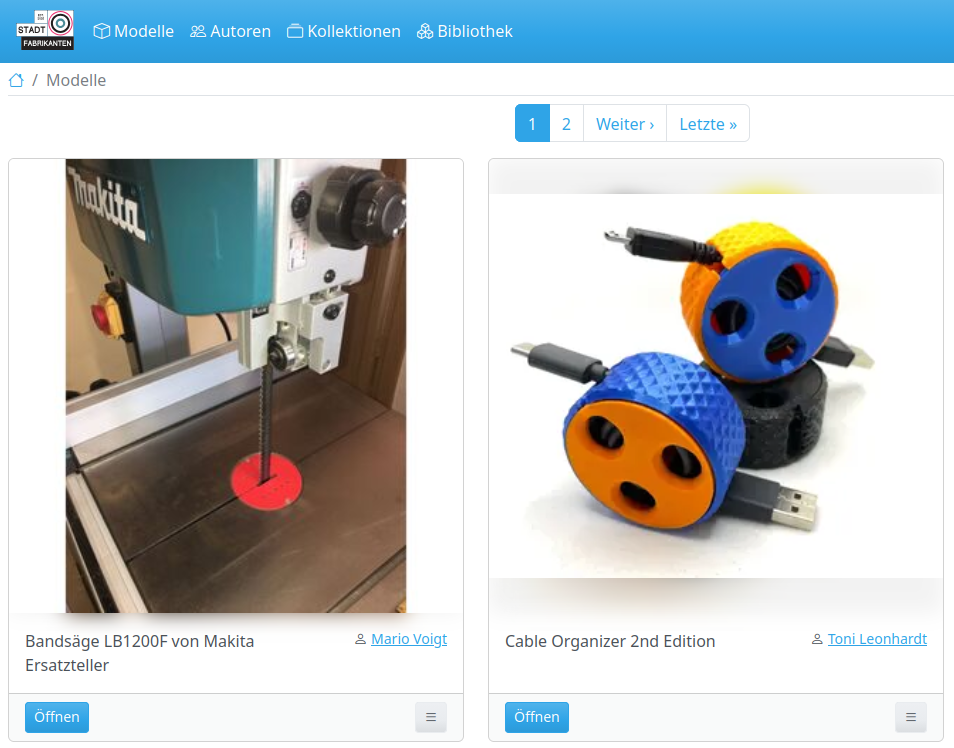
In the spring, we added our own Manyfold 3D instance. It’s a sort of replica of Thingiverse. It allows us to store and distribute what are known as ‘assets’. Specifically, we use it to store our own 3D-printed and laser-cut models. In one respect, this promotes sustainability and organisation: we can easily find our designs and spare parts again, access them quickly and without adverts, link them effectively to our own documentation, and share them with third parties – just like Thingiverse, but without commercial intentions or the distraction of even more bells and whistles.
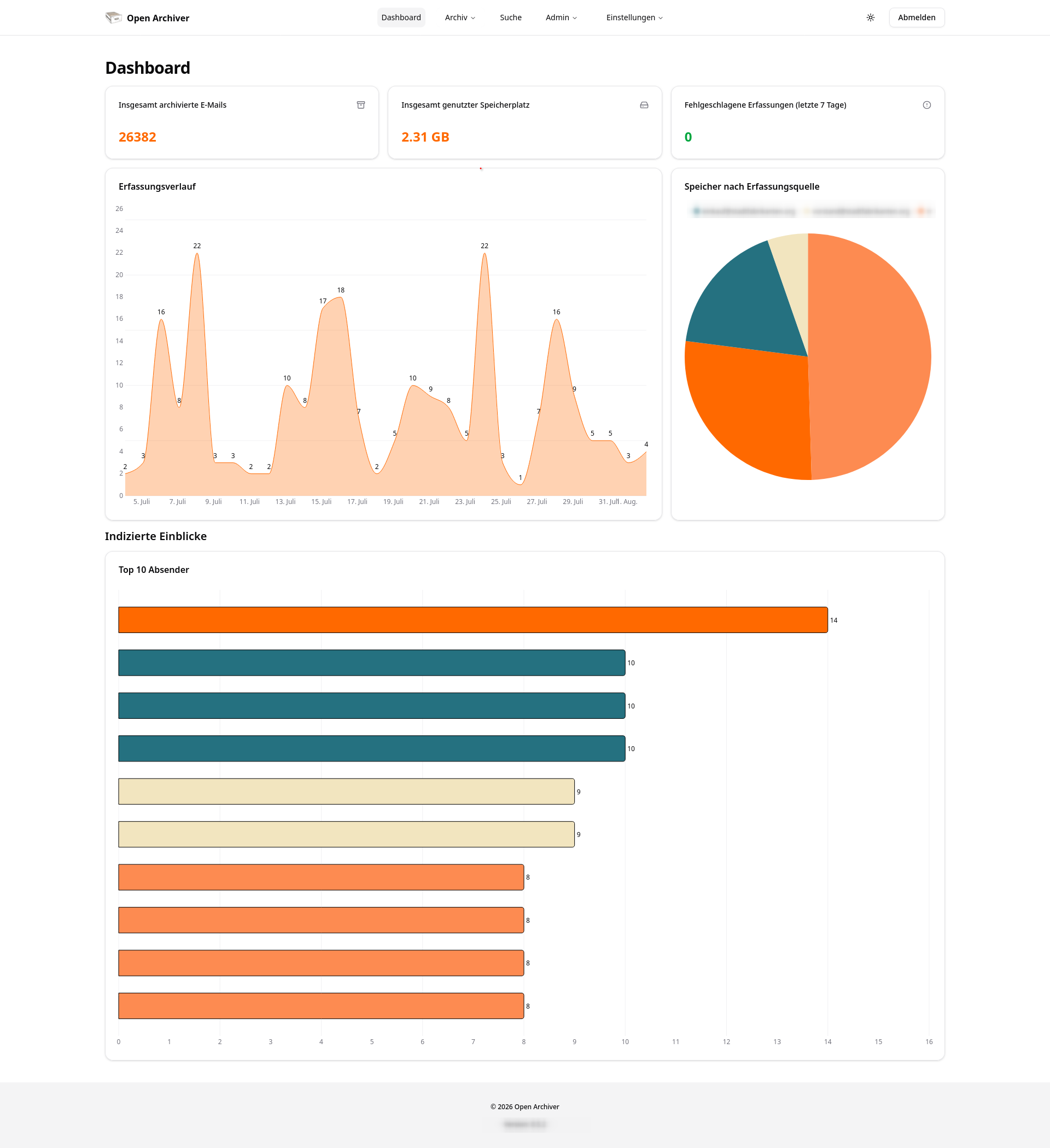
We also comply with statutory archiving requirements to ensure that the association’s work remains up to date and on a sound footing. For this reason, we integrated a new GBOD-compliant OpenArchiver solution at the end of spring. It may seem unremarkable, but it’s practical. It takes a huge load off our email inboxes and helps with the tedious task of ensuring compliance with bureaucratic record-keeping requirements.
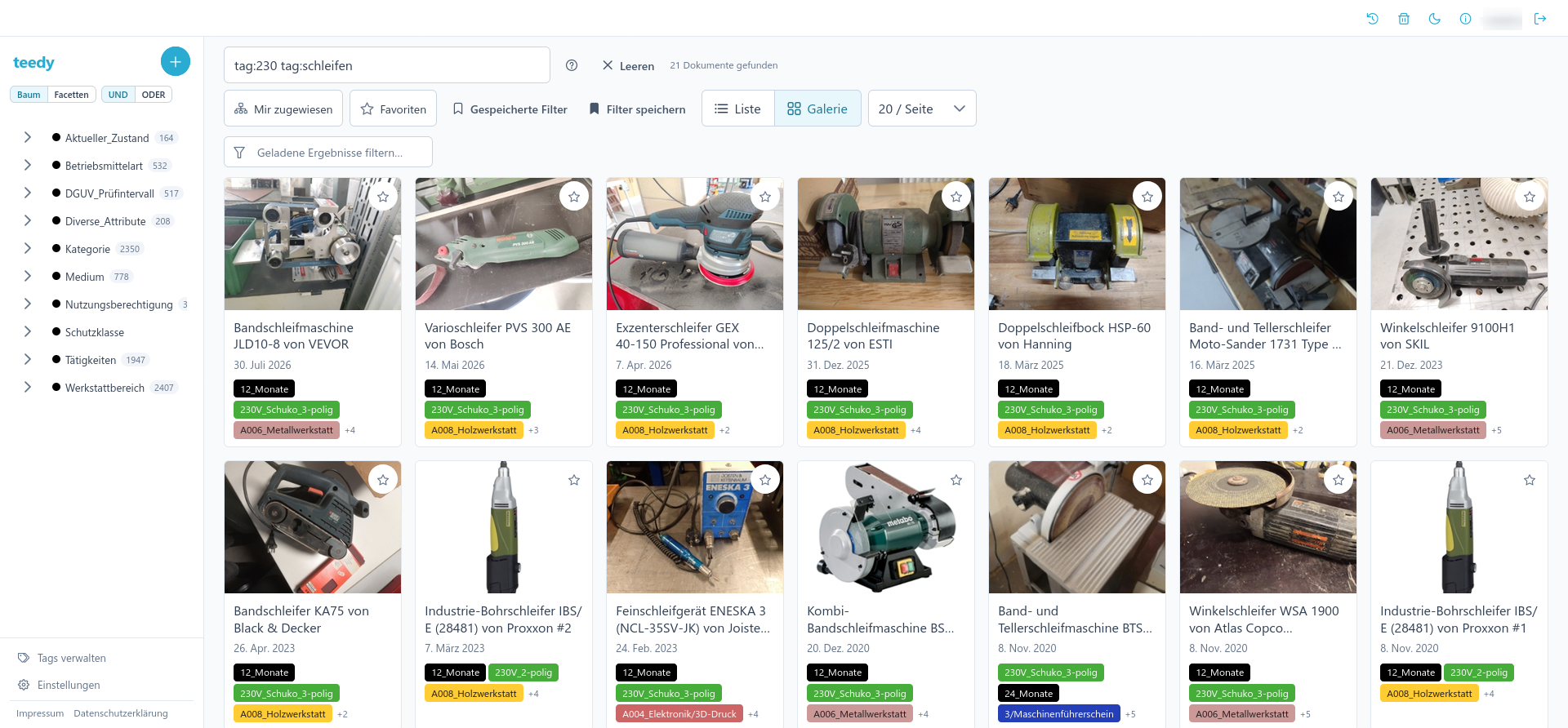
I’ve been working alongside Fabian Maaß since July. He’s a particularly dedicated individual who continues to develop Teedy Docs and writes open-source code at breakneck speed. Teedy is the software we’ve been using for many years for our document management as well as to keep track of the association’s accumulated inventory. As a power user of Teedy, I have a lot of feedback to contribute and still have many wishes and ideas about what could be done with it. I’ve been particularly committed to the issue of inventory management within the club for many years now, and I strive to ensure maximum clarity and transparency in the workshop. I’m simply just as convinced now as I was at the start that this seemingly mundane task of inventory management is key to practising and promoting long-term sustainability within the association. Only those who know where everything is, who owns what, what a particular item can do, and how it works can effectively communicate this, save resources, pool resources cleverly, or share resources.
Buying and storing things is usually done in a flash – but what happens next? Who takes care of it? We see the consequences of ill-considered shopping time and again in plenty of other initiatives and among private individuals in our neighbourhood. That’s why our basic approach is this: a central hub for the things that support us. Who’s the point of contact for item X? Where can I find manual Y? What does item Z look like? After all, these and other questions often shape day-to-day life at the FabLab. Tools are, after all, just aids. IT tools, incidentally, are also just aids. The question is how they’re used and shared – in other words, how they’re put into practice.
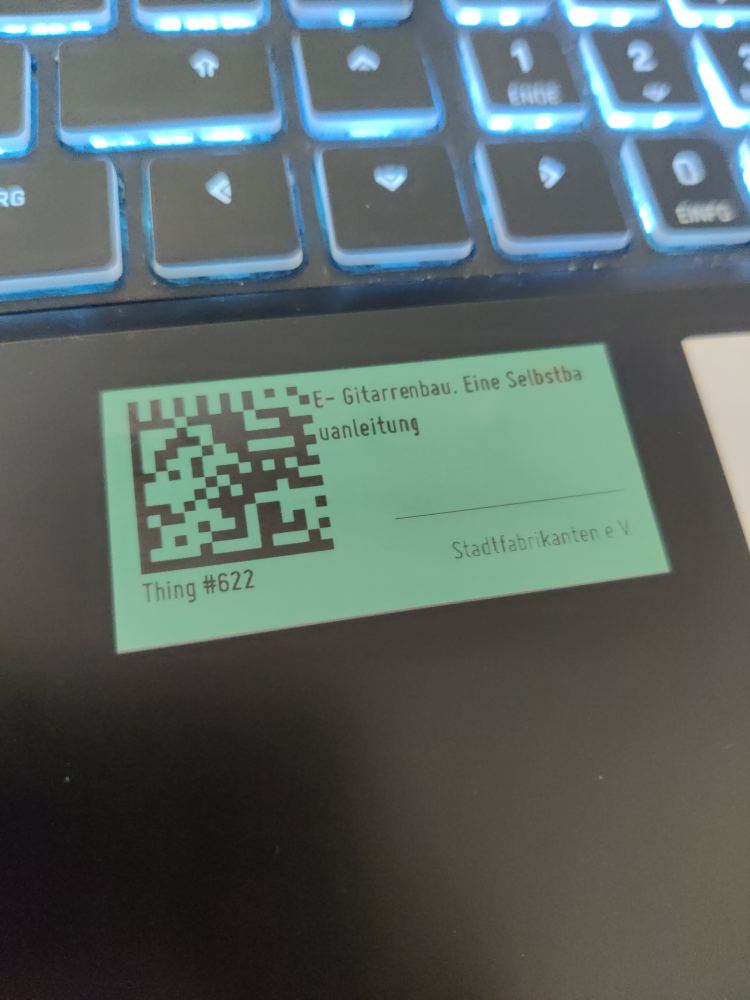
Whilst updating Teedy, I’ve also returned to the issue of inventory stickers, which had been somewhat sidelined: every item in the workshop is to have its own sticker. These are scannable, making it easy to access the manual and key information – such as contact details – for each item. The basic idea is also that the labels are easy to print and, thanks to a colour-coding system, clearly indicate what belongs where, and so on.
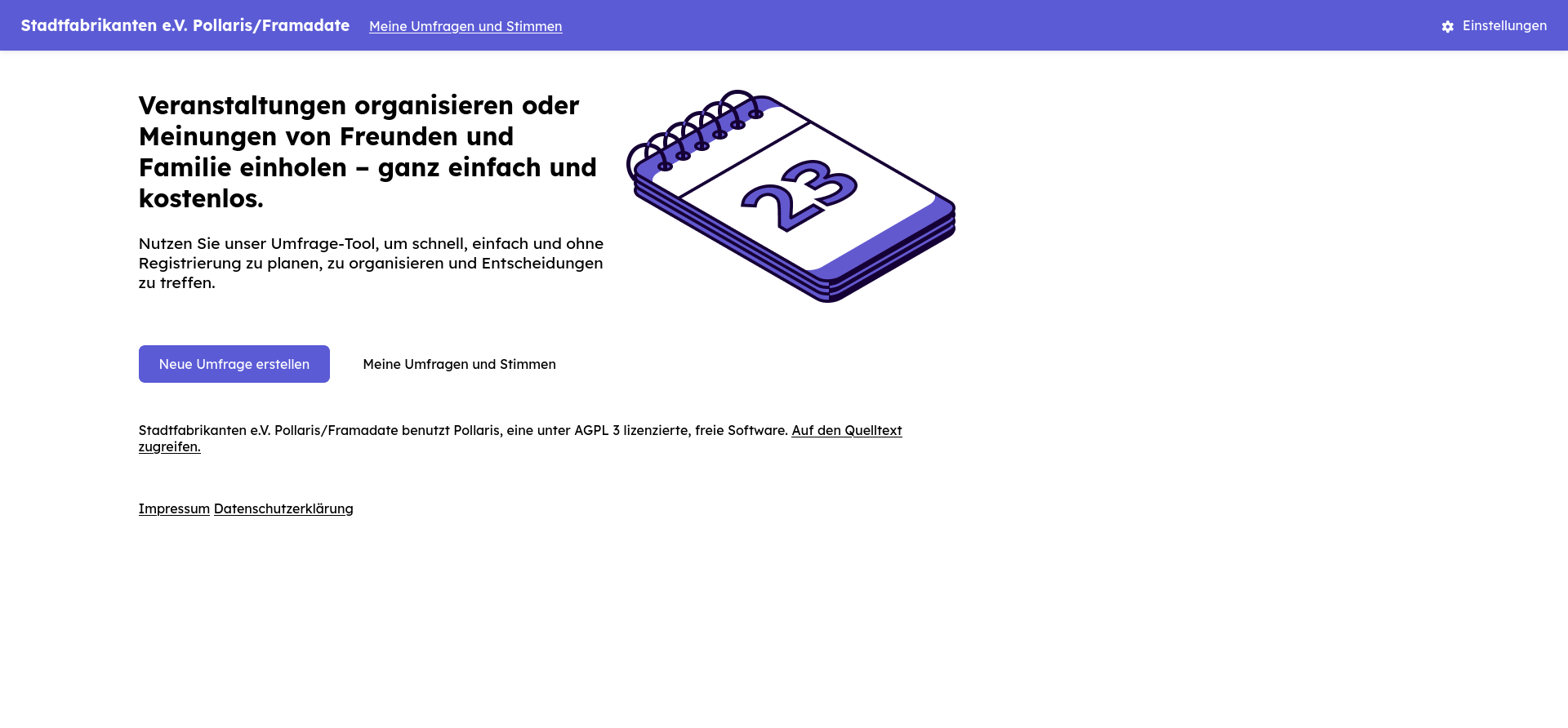
Further virtual tools have been added to our organisation and help with various routine tasks in our day-to-day work: our own language translation and spell-checking services (LibreTranslate and OmniPoly), as well as an email template builder for formatting clear and readable emails to the general public (EmailBuilder.js). The older FramaDate has been replaced by the newer Pollaris project. Membership applications and a few other standard documents can now be completed, signed and submitted digitally, as well as via the existing paper-based method – for this, we use DocuSeal.
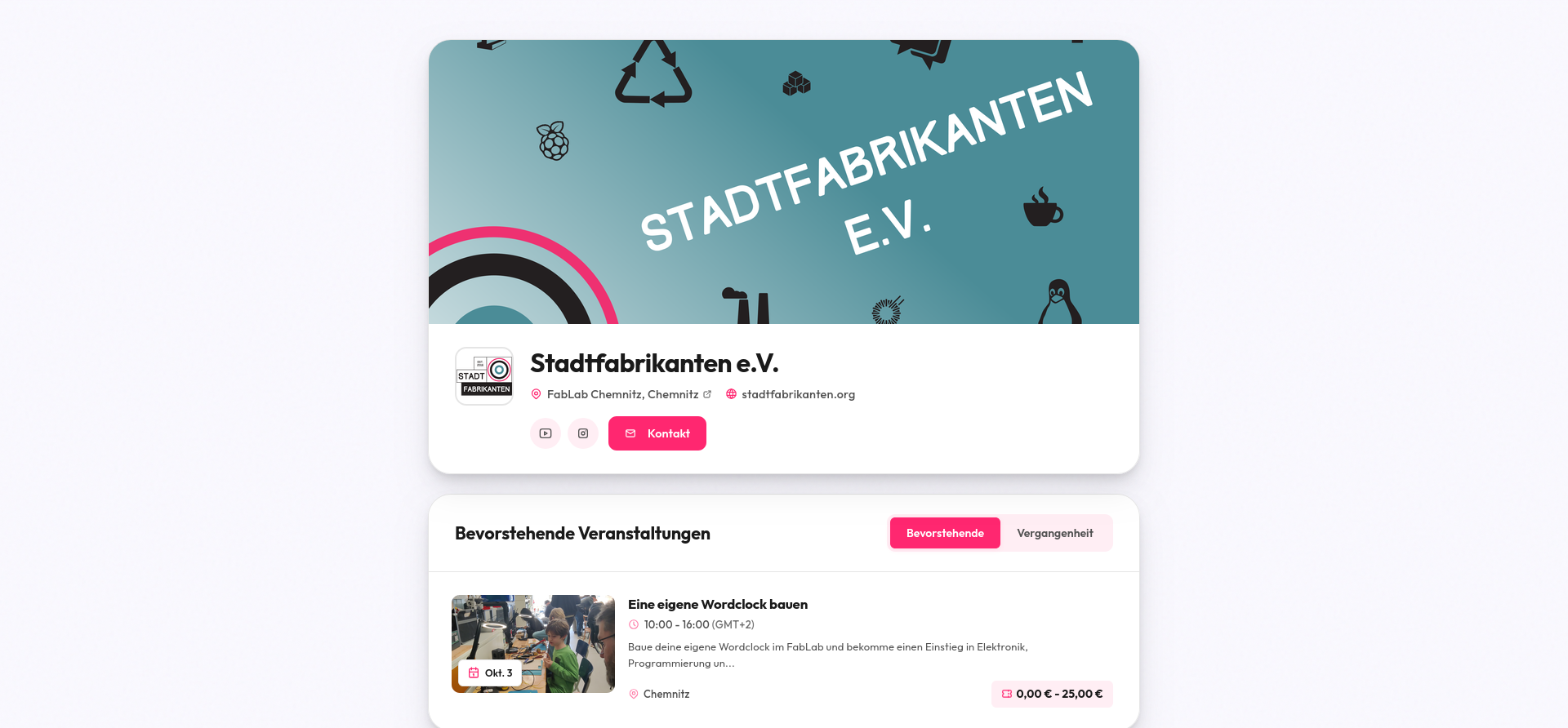
One particularly great new feature we introduced in the course of 2026 is HiEvents. This is an open-source solution for the structured management and publication of planned events, such as workshops. It makes publishing bookable events online logical, simple and convenient for both parties: workshop leaders and participants alike.
Workshop usability in summer: a digital analysis of analogue causes
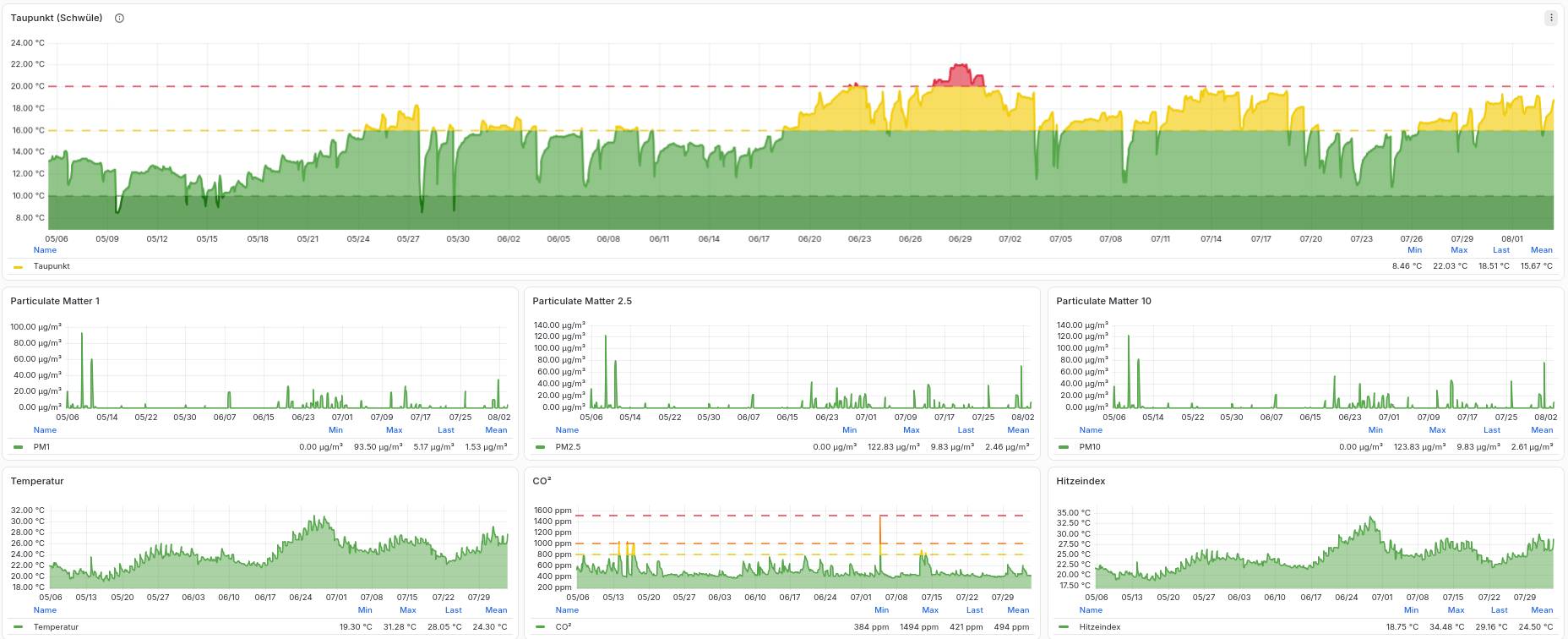
A small but interesting piece of kit at FabLab Chemnitz is our OSH AirGradient environmental sensor. We’ve been using it since 2025, and the long-term analysis of the monitoring data shows once again how the microclimate depends on the outside climate and where we ourselves can make a difference. We can now definitely identify when excessive carbon dioxide makes the air feel stifling, or when an uncomfortable dew point causes bouts of sweating that aren’t always immediately explainable (thanks to thermodynamics). The latter (dew point), as a directly perceptible effect, is primarily due to the climate change we’ve brought about, which – through the intensive over-exploitation of resources – is becoming palpable to everyone year on year as a cumulative global increase in heat, causing spaces both indoors and outdoors to feel as though they’re melting away.
Who wants to be physically active when it’s 32 °C in the shade, unless they absolutely have to? We already measured this at the FabLab back in June, and the structural condition of the part of the Stadtwirtschaft building where we’re based probably doesn’t allow for any quick or cost-effective changes that could improve the situation. At our old location, it was always too cold for us in winter. At the new location, it might now end up being too warm all the time. So perhaps we should introduce a siesta after all and shift the lab hours to the late afternoon or evening!?
Comments